SaaS MVP Development: Scope Around the First Payment, Not the Feature List


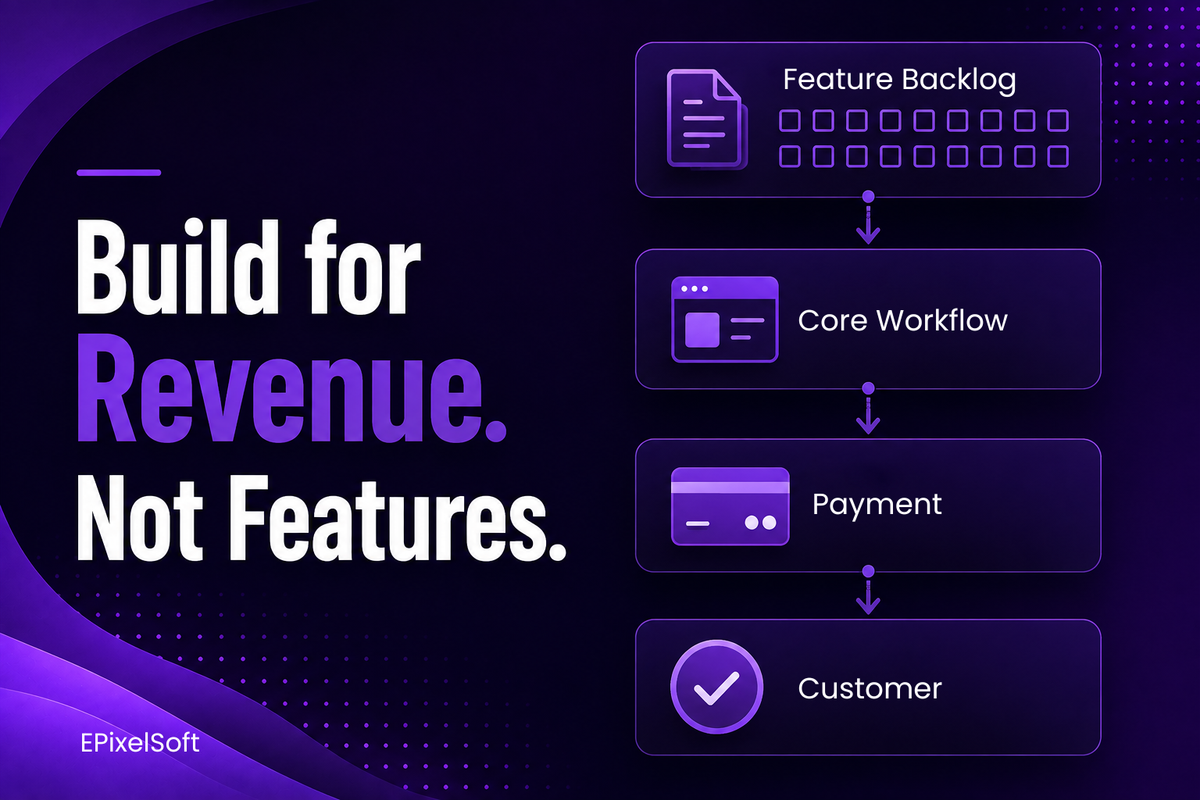
Funded founders scoping a SaaS MVP usually cut features until the build feels small enough. That is the wrong axis. The scope that predicts traction is the shortest path to a paying customer: self-serve signup, the one workflow that delivers value, and working billing. According to CB Insights, 43 percent of startups fail from poor product-market fit, not from shipping too few features. Scope the MVP around the first payment, and validation comes built in.
Every founder building a first SaaS version arrives at the same question: what goes in the MVP and what waits. The standard answer is to cut. Strip the roadmap down to the smallest set of features you can defend, ship that, and add the rest later. It sounds disciplined. It is also the reason a lot of MVPs launch, collect polite feedback, and never turn into a business.
The problem is not the instinct to cut. It is the axis founders cut along. Feature count is the easiest thing to measure, so it becomes the thing they optimise. They end up with a lean, tidy product that demonstrates the idea and asks no one to pay for it. Six weeks later they have opinions, a waitlist, and no revenue signal.
There is a better axis, and it is not the number of features. It is whether one real customer can travel from landing on your product to handing you money, and whether that journey actually works start to finish. Scope for that, and the MVP validates the one thing that reliably kills startups.
Why cutting features is the wrong kind of discipline
Trimming scope feels safe because every guide tells you to do it. Ruthless prioritisation, one core workflow, ship in six to ten weeks. That advice is not wrong, but it answers the wrong question. It optimises for a small build, not for a build that produces a buying decision.
The data on why startups die makes the distinction sharp. According to CB Insights, which analysed 431 failed venture-backed companies that shut down since 2023, 43 percent failed because of poor product-market fit, meaning they built something not enough people wanted badly enough to pay for. Running out of capital appeared in 70 percent of the post-mortems, but CB Insights explicitly calls that the final symptom, not the root cause. Startups rarely die from a missing feature. They die from never confirming that anyone would pay.
About The Author

Anil Kothiyal
LinkedInAnil Kothiyal is the Founder and CEO of EPixelSoft, an AI-native software engineering firm with 12 years and 700+ products shipped across FinTech, HealthTech, NGO operations, and SaaS. He has led engineering engagements for clients across the US, UK, Africa, and Asia — including platforms that compressed underwriting cycles from days to hours and field reporting systems deployed in East Africa. Anil writes about AI in production, high-stakes software delivery, and what it actually takes to build systems that hold up at scale.